Easy to moderate
These large-polyp LPS corals prefer stable water parameters, rather moderate lighting and gentle, indirect flow. A sheltered spot where the delicate tissue can expand fully is particularly important.
Your online shop for
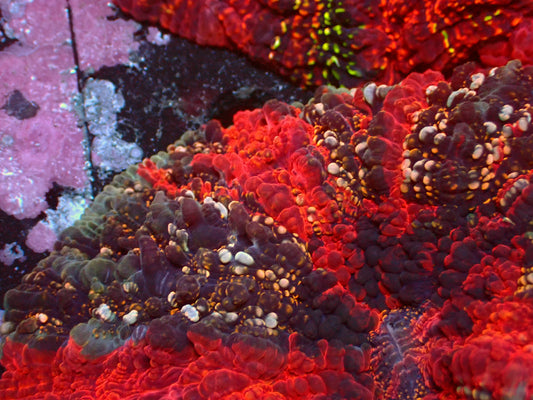
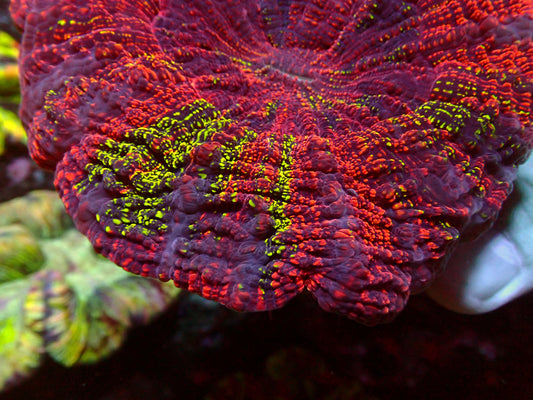
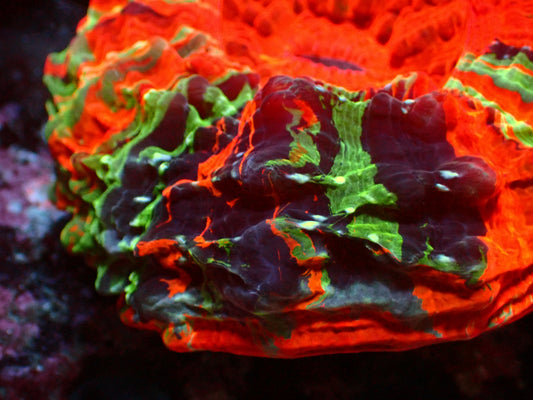
Acantho (Acanthophyllia deshayesiana), Cynarina (Cynarina lacrymalis) and Scolymia (Scolymia australis) are among the most impressive solitary corals for the reef aquarium. With their exceptionally fleshy tissue, intense colours and impressive polyp expansion, they quickly become the centrepiece of any reef tank. For successful Acanthophyllia, Scolymia and Cynarina husbandry, stable water parameters, moderate lighting, gentle flow and placement on a fine sand bed are ideal. Regular feeding with high-quality LPS coral food supports healthy growth, strong tissue and intense colour development.
WYSIWYG: WYSIWYG only applies to products marked accordingly.
Care at a glance
These large-polyp LPS corals prefer stable water parameters, rather moderate lighting and gentle, indirect flow. A sheltered spot where the delicate tissue can expand fully is particularly important.
These details are intended as a guide. Always watch how each individual coral responds and adjust light, flow and placement as needed.
These large-polyp LPS corals prefer stable water parameters, rather moderate lighting and gentle, indirect flow. A sheltered spot where the delicate tissue can expand fully is particularly important.
Moderate lighting is usually sufficient. Acclimate new animals slowly and do not place them directly under strong LEDs at first.
Flow should be gentle and indirect. Excessive flow can press the strongly inflated tissue against the skeleton and injure it.
Targeted feeding with small portions of mysis, artemia or other fine frozen food can support vitality and tissue development.
Place on a flat, soft surface with enough distance from sharp-edged rock and neighbouring corals.
Growth is slow. The focus is on stable tissue development, full expansion and long-term colour retention.
More about Acantho/Cynarina/Scolymia
Although Acanthophyllia, Cynarina and the corals sold as Scolymia look similar at first glance, they differ in body shape, tissue structure and growth. What they have in common is their usually single, particularly large and fleshy polyp.
Acanthophyllia often develop very voluminous, widely expanding tissue and can grow into impressive showpieces. Cynarina often look more transparent or more strongly segmented and show characteristic radial structures.
The name Scolymia is still widely used in the trade. Many Australian “Scolymia” are now scientifically assigned to the genus Homophyllia. For customers, however, the established trade name remains understandable and relevant.
Acanthophyllia deshayesiana (Acantho),Cynarina lacrymalis, Scolymia are among the most spectacular LPS corals for the reef aquarium. With their large, fleshy polyps, intense colours and impressive tissue expansion, they are some of the most popular solitary corals for demanding reef tanks. Whether bright green, bold red, orange, pink, gold or exceptional rainbow morphs – every coral is a unique eye-catcher.
In their natural habitat, both species mainly colonise sandy areas or sheltered lagoons. This lifestyle should also be taken into account in the aquarium so that the delicate tissue can expand freely.
Successfully keeping Acanthophyllia, Cynarina and Scolymia depends above all on stable water parameters and consistently high water quality. Sudden changes in temperature, salinity or carbonate hardness should be avoided.
Recommended guideline values:
• Temperature: 24–26 °C
• Salinity: 34–35 PSU or approx. 1.025–1.026
• pH: 8.0–8.4
• Carbonate hardness: 8–9 dKH
• Calcium: 400–450 mg/l
• Magnesium: 1,250–1,400 mg/l
• Nitrate: approx. 5–15 mg/l
• Phosphate: approx. 0.03–0.10 mg/l
These corals usually prefer low to moderate lighting and gentle, indirect flow. Excessive flow can press the widely expanded tissue against the coral's own skeleton and lead to injuries over time. After placing the coral, pay particular attention to tissue expansion. A fully open coral with strong colouration is usually a good sign that the spot, lighting and water movement have been chosen well.
Acanthophyllia, Cynarina and Scolymia usually feel most at home in the lower part of the aquarium or directly on the sand bed. A flat, soft surface protects the delicate tissue from injuries caused by sharp-edged reef rock.
Leave enough space between neighbouring corals. The large polyps can expand considerably and need enough free space. At the same time, other corals should be prevented from touching the delicate tissue or damaging it with sweeper tentacles.
New animals should be acclimated slowly to the existing lighting. Start in the lower zone and only adjust the position gradually if the coral expands little over a long period or its colouration changes.
Low to moderate lighting is sufficient for many specimens. Excessive lighting can cause the tissue to retract or the coral to show visible signs of stress.
Flow should be gentle, indirect and preferably alternating. The water may move lightly over the tissue but should not constantly compress the polyp or push it against the skeleton.
Targeted feeding can support vitality, tissue development and growth. Small portions of mysis, artemia or other fine, meaty frozen food are suitable.
Feed in a controlled way and only as much as the coral can fully take in. Under stable conditions, these LPS corals develop large, strong polyps but usually grow much more slowly than many fast-growing coral species.
Exclusive access
Some corals appear only once. As a member, you'll hear about new rarities, limited one-offs and special drops before anyone else.
Get earlier access to new rarities.
No daily advertising. Only relevant drops and news. Unsubscribe at any time.
You have copied the placement for the Product Page.
Go back to the App Embeds section, and in the Paypal Advanced Settings, paste the copied value into the Product Page field and click the 'Save' button in the top right corner.